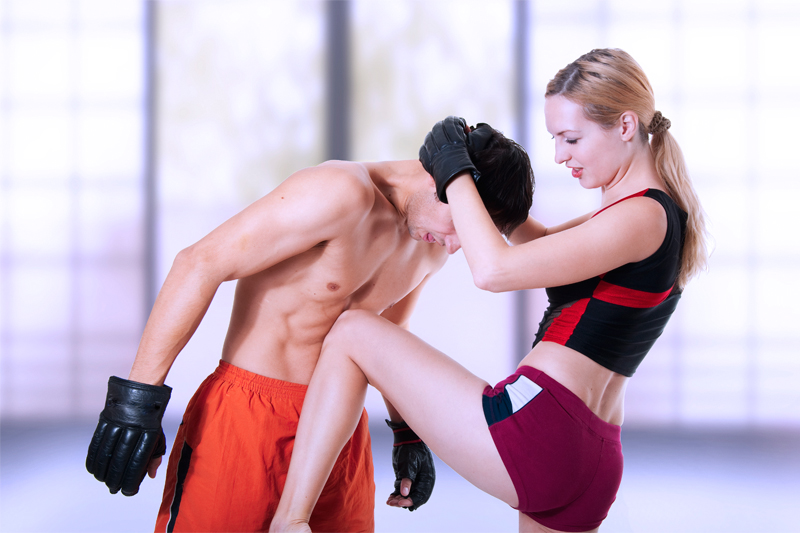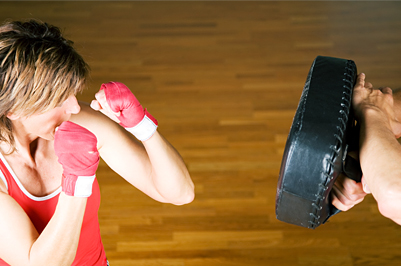
Picture your typical striker. Most people will envision a man standing upright, with good posture, head lined up directly above his hips and his hips perfectly positioned above his feet. From this position, he will throw his strikes. Again and again we see this in demonstrations of martial arts, from Karate katas to Kung Fu exhibitions. Even in sports considered to be fundamental to mixed martial arts, do we see strikers throwing from his upright position during demonstrations, shadow boxing and so on. The strikes look crisp, the movement looks clean and effective and it is easy to slip into believing that because of this, the striker must be good at what he does.
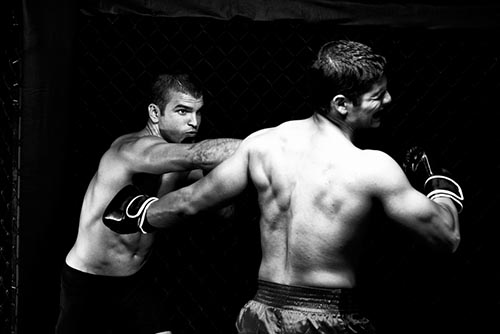
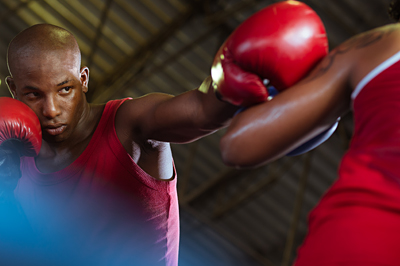
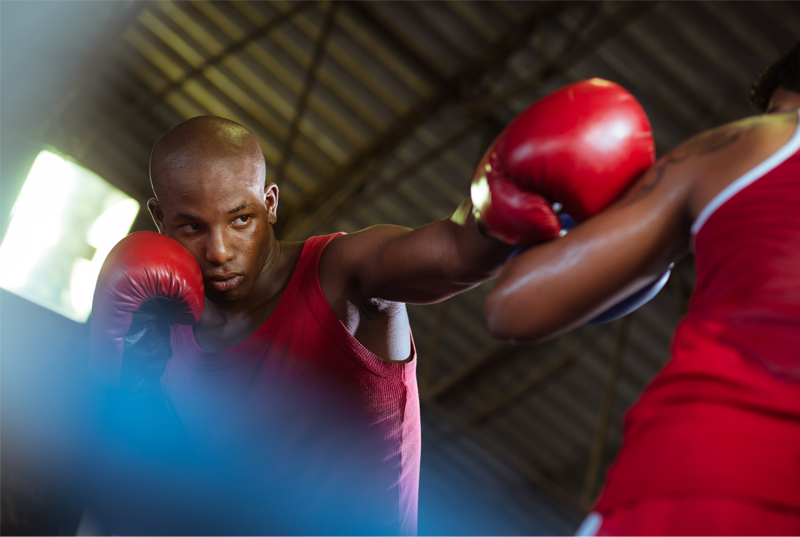
Contrast that with the way most knockouts look, the way both fighters’ bodies are in what looks to be awkward, unusual positions. To take that even further, look at the way many of the greatest fighters in history (Roy Jones Jr, Prince Naseem Hamed, Anderson Silva etc) all move in ways that break the rules.
What if I told you that the rules most people learn and play the game by are not the best rules? Many in the boxing world say that Roy Jones Jr isn’t a textbook boxer. They say you can’t learn the stuff a guy like Anderson does, it has to come from instinct. Well, what if I told you that I have uncovered that secret code, that next level way of thinking about striking that will elevate your game to a whole new level, and it’ll level you up FAST!
The first thing to consider is the contrast I’ve already drawn between standard, textbook striking and the striking that gets results, the technical vs the effective.
In order to really strike effectively (which means to score knockouts), one needs to be comfortable in the uncomfortable. What this means is, those positions so rarely seen in demonstrations of technique, but so often seen in devastating results, are the positions where one needs to be most comfortable. Which means most practiced. Now here’s the kicker. Moving into those positions checks both boxes in the “what boxing is about” checklist. It is said that boxing is the art of hitting without getting hit. So using movement to unusual positions can be used defensively, and that movement can be physically (as in the laws of physics) charged to deliver vicious power too.
As one becomes proficient in moving for defensive purposes and moving for power, so one is able to rely entirely on his instincts, to avoid danger and be in position to attack. (Movement is a key here, and therein lies the beauty of arts like capoeira and forms of dance like breaking). This in turn frees up one’s cognitive resources to focus on the next level, timing.
To set the stage for this, let’s briefly highlight just how important timing is. We’ve all seen guys with beautiful technique getting knocked the fuck out, and we’ve all seen guys who have probably never trained technique a day in their life, knocking out people consistently. So that tells us that technique is not the most important thing when it comes to deciding who will win a fight.
I’ve spent years trying to break this code, and I’ve seen A LOT of fights, and been involved in my fair share (professionally of course). It seems to be the most important factors are movement for range and timing. Those two make up 80% of the game. Other factors like angles, targeting and so on make up another 15% or so, and technique only the last 5%. Technique is the cherry on the top that takes a fight from a wild brawl to a clean, precise finish.
So once a level of proficiency in movement and range has been achieved, it is time to focus on timing. Has anyone ever broken down timing into what it is made of before? Well, let’s do that. Timing consists of beats and half-beats. Most people play a two beat game, because they simply have no idea that the game exists, and so fall into the base instincts we all begin with. A beat is basically the time it takes a movement to reach full extension. So for instance, a jab reaches full beat when it is fully away from the chin, and the second beat is the moment the jab completes it’s journey back to it’s starting position. I bet you that’s the way you got taught to jab, right? Throw out the jab and bring it back as quickly as possible? Well, that’s a two beat game. In order to play a one beat game, you need to be able to defend from that fully extended jab position. Why? Because sometimes your opponent will catch you while your arm is extended. If you and I launch an attack at exactly the same time, our attacks will arrive very close together. If you are already competent in defending while jabbing, you will be safe from my attack!
Let’s look at how to use beats offensively. Since one step is a full beat, and since most people play a two beat game, the way most people move is by stepping forward first with their front leg, then their back leg follows. In fact, I bet you’ve been taught that’s the way to move. To keep the feet a certain distance apart. Well here is what they don’t tell you. You don’t need to alternate legs. In other words, if you step forward with your left leg, you can simply step back with your left leg. Obvious, right? Have you ever practiced moving like that? So, let’s start using our one beat game effectively against a two beat game. Since we know most people will step one leg forward then the other, we can co-ordinate our movement with them by stepping one leg back the moment they start stepping one leg forward, which will keep the distance equal and mark the end of the first beat. At the start of the second beat, as they begin stepping their other leg, we begin throwing a jab. Because they are closing the distance for us, the jab and the opponent should arrive in the right spot at the right time. Now here’s the kicker. Since he is already committed to coming forward (thanks to momentum), he has to stop before heading backward, which means he cannot avoid our jab by movement. So we have used a tempo advantage.
Hopefully that makes it clear that a one beat game has an advantage over a two beat game (which is the kind of game most people play instinctively, and which is reinforced by common coaching). Similarly, the person playing a half beat game has an advantage over the person playing a one beat game.
To put this another way, a strike can be broken down into 3 parts. The start, the extension and the finish. It should be fairly obvious what each of those are. If I start my strike as you start you’re strike, I am striking on the half-beat, if I start my strike on the extension of your movement, I’m striking on the full beat, and if I start my strike on the end of your movement, I’m striking on the second beat. So to apply timing to that, movement that starts at the start of a movement is half-beat movement, movement that starts at the extension of a movement is full beat movement, and movement that starts at the end of a movement is two beat movement. Timing reflexes are exactly that, reflexes. You know when you get tapped on the knee it reflexively extends? That kind of reflex. The moment a strike is perceived, reflexive actions follows (instinctively). Now there will be a delay if there needs to be conscious direction at this point. The body must know the reflex and carry it out without contact with the conscious mind, the same way to body knows to yank the hand off a hot stove. This requires a particular way of training that is well known in other sports and yet is virtually ignored in martial arts.
Different timing (aka attacking at a different tempo) calls for different movements and strikes. To reach an effective level of striking, to make one capable of gaining a quick, clean knock-out, one needs to be able to move in a particular way, and apply timing and tempo. It doesn’t matter how good one’s timing is, how good they are at playing to the correct tempo, if one is not in position to deliver a blow to the opponent. And therein lies the importance of movement, because movement fulfils both defensive demands and allows (and in fact generates power) for attacking opportunities.
Similarly, it doesn’t matter how good one’s movement is, if one cannot avoid attacks and deliver blows at the correct time.
Thus, by achieving the first level in striking, one is capable of safely and consistently knocking out one’s opponents.
Next level: targeting (target selection) and accuracy.
Here’s something for you to chew on. What if I told you scoring knock-outs has very little to do with power?